Brand Messaging in Video Content: Why Leading With Your Pitch Can Cost You Views
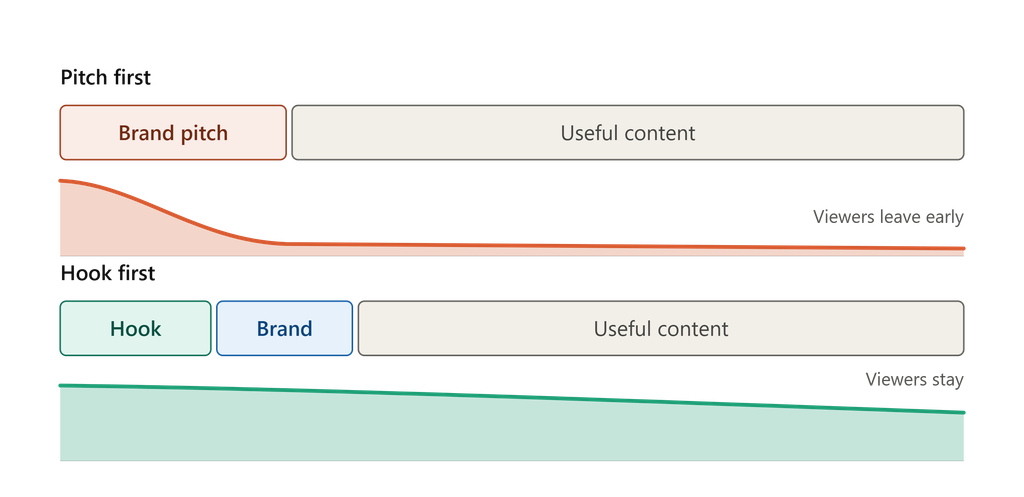
You spend days making a video. The first few seconds introduce your brand, your product, and why it matters. Then viewers scroll away.
I have seen this happen, and two new 2026 reports help explain why. They come from different corners of marketing, but they point to the same lesson. How and when you deliver brand messaging in video content decides whether people stay.
In this guide, I’ll walk through what the reports found, share what I’ve seen in my own work, and show you how to fix your brand messaging in video content without hiding your brand.
What the Two Reports Found
Report 1: Creator Instinct: Unlocking the Social Code. Billion Dollar Boy worked with DAIVID to analyze 5,000 creator-led assets across the US and UK, spanning Instagram, TikTok, paid social, and brand-lift campaigns. The team measured engagement, view-through rate, brand favorability, and purchase intent, and mapped each asset against 39 emotional signals. ExchangeWire
One finding stands out. Assets that opened with product, benefit, or brand messaging saw view rates drop 44%, brand favorability drop 12%, and consideration drop 41%, compared with content that built a hook first. Search Engine Journal
Report 2: IAB’s AI-Powered Video Outcomes guide. This June 2026 report looks at video from the advertiser’s side. It highlights an analysis of Reuters news content by Integral Ad Science. In that test, 54% of URLs cleared by contextual targeting would still have triggered a typical keyword blocklist. The guide argues that multimodal AI, which analyzes video, audio, speech, and images together, gives a fuller read of context and tone than keyword-only filters. AdExchangerTV News Check
Here is the link between them. Both reports ask the same question: is good content getting filtered out, by viewers or by settings, before it can do its job?
Why Early Brand Messaging in Video Content Hurts View Rates
Viewers decide fast. If the opening seconds are a pitch, they get nothing in return for staying.
The creator report describes the alternative. Creators structure content to build attention and sustain engagement before they deliver the sales message. The brand becomes the payoff, not the price of admission. Agility PR Solutions
What This Looked Like in My Work
I worked on a video that opened with a long promotional message. Viewers lost interest and dropped off early. So we shortened the intro and led with the useful content first.
After that change, early drop-off decreased and average watch time improved. Views also became more consistent. The biggest gain came from keeping viewers engaged in those first few seconds.
Where to Put Brand Messaging in Video Content Instead
I now place the brand message after the main hook or useful content begins, not at the very start. To decide the timing, I check audience retention and drop-off data and test different placements.
Here is the process:
- Open with the hook. Start with the problem, result, or most useful moment.
- Bring in the brand next. Introduce it once viewers have a reason to stay.
- Check your retention graph. Look for early drop-off.
- Test two placements. Compare them using the same audience.
- Keep what holds attention. Then repeat on your next video.
This table shows the difference (the examples are illustrative):
| Front-loaded opening | Hook-first opening | |
| First five seconds | “We’re [Brand], and our new tool does X.” | A problem or result the viewer cares about |
| Brand appears | Immediately | After value starts |
| Reason to keep watching | Weak | Clear |
| Main risk | Early drop-off | Brand may feel late, so test the timing |
Want a simple brief template for this? [CTA: Download the hook-first video brief]
The Other Problem: Brand Safety Filters That Block Good Reach
Your message can also fail before anyone sees it. Overly broad keyword filters can keep your ads away from suitable content.
I have seen this firsthand. Overly strict keyword and brand-safety filters excluded relevant audiences and reduced campaign reach and impressions. We refined the filters to block only genuinely unsuitable content, while keeping relevant placements eligible.
My advice is simple. Be specific about your target audience and your exclusions instead of using broad filters. That protects your brand without needlessly limiting reach.
Keep the numbers in context, though. The 54% figure comes from Reuters news content. In the lifestyle section, the share was only 4.27%, and the news figure does not mean 54% of impressions were blocked. AdExchanger
A Quick Checklist for Brand Messaging in Video Content
Run through this before your next campaign:
- Watch the first five seconds. Does it give viewers a reason to stay?
- Check where viewers drop off in your retention data.
- Move heavy product or brand claims later, then test the result.
- Review your exclusion lists and note when they were last updated.
- Replace broad keyword blocks with specific exclusions.
- Re-check reach after every filter change.
What These Reports Can’t Tell You
Be careful with big numbers. These findings are useful, but they have limits.
- The creator report is agency research. Billion Dollar Boy built the work and commissioned DAIVID to measure it. The data covers 77 brands across six verticals: beauty, fashion, personal care, entertainment, food and drink, and retail. Results may differ in other industries. Agility PR SolutionsAgility PR Solutions
- The brand safety figure is specific. It comes from Reuters news content, not all video.
- Your audience may behave differently. That is why I test placements against my own retention data.
Treat the reports as a starting point for brand messaging in video content, not a rule.
Frequently Asked Questions
What is brand messaging in video content?
It is how and when a video communicates who you are, what you offer, and why it matters. That includes the opening pitch, logo placement, and the final call to action.
Where should brand messaging in video content appear?
Test it after the hook or the first useful moment, not at the very start. Use your retention and drop-off data to find the best timing.
Should I hide my brand in the first few seconds?
Not necessarily. The reports suggest that leading with a sales pitch hurts results. Focus on giving viewers a reason to stay first, then test where the brand fits best.
Can keyword filters reduce my campaign’s reach?
Yes. Overly strict filters can exclude suitable content and relevant audiences. Refine them so they block only genuinely unsuitable content.
Conclusion
Strong brand messaging in video content earns attention first, then asks for it. Lead with the hook or something useful, place the brand once viewers have a reason to stay, and test the timing with your own retention data.
Then check your filters. Specific exclusions protect your brand better than broad ones, and they keep your reach intact.
Here are your next steps:
- Audit your last few videos. Note when the brand first appears.
- Move the pitch later in one video and compare retention.
- Review your brand-safety exclusion lists this week.
As a digital marketing freelancer consultant in Kochi, I’ve watched brands spend days on a video, only to lose viewers in the first few seconds by opening with a sales pitch. The fix isn’t to hide your brand. It’s to earn attention with a strong hook first, then bring your brand in once people have a reason to stay.